


Cranes are crucial for the safe and efficient transportation of materials in sectors including manufacturing, shipping, construction, and oil and gas, where heavy lifting is a regular part of daily operations. However, if these machines are not adequately maintained and tested, their strength and complexity may pose serious safety threats. Crane load test is an important safety measure that should never be ignored. This process helps protect lives, machinery, and companies by guaranteeing both legal compliance and operational safety.
What is Crane Load Testing?
In a crane load test, a set weight that is often heavier than the crane's rated capacity, is lifted in order to simulate real-life conditions and assess the crane's mechanical performance. This test verifies that the equipment can safely and reliably handle unexpected loads. Usually, load tests are performed as part of routine inspections, following major repairs, or during initial installation.
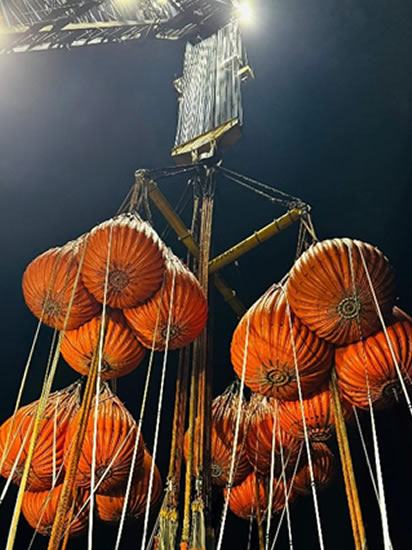
A crane load test water bag is one often used method that enables safe and efficient controlled load application. These water bags provide flexibility and accuracy in testing without requiring heavy, solid weights because they are filled gradually to the required weight. Furthermore, using a crane load monitoring system during these tests helps in capturing real-time load data, ensuring precision and improving safety by avoiding overloads.
Ensuring Workplace Safety
Ensuring operational and personnel safety is the main goal of a load test. Cranes are complex machines with numerous moving components that may eventually break down. Catastrophic accidents might result from hidden flaws like faulty brakes, issues with the hoisting mechanism, or cracks in structural components. A failed lift could result in serious property damage, injuries, or even fatalities.
Ensuring operational and personnel safety is the main goal of a load test. Cranes are complex machines with numerous moving components that may eventually break down. Catastrophic accidents might result from hidden flaws like faulty brakes, issues with the hoisting mechanism, or cracks in structural components. A failed lift could result in serious property damage, injuries, or even fatalities.
By enabling progressive loading and reducing the possibility of sudden mechanical stress or failure, the use of a crane load test water bag improves safety even more during the test itself.
When combined with a crane load monitoring system, it gives operators and safety personnel accurate data about load conditions, facilitating a prompt reaction to any irregularities and guaranteeing that the crane stays within its safe working limits.
Meeting Regulatory Compliance
Crane load test is not only advised but also required by law in several nations, including the UAE. Lifting equipment must be regularly tested and certified by occupational safety bodies like OSHA (Occupational Safety and Health Administration), LOLER (Lifting Operations and Lifting Equipment Regulations), API (American Petroleum Institute), ASME (American Society for Mechanical Engineers), etc.
Project delays, heavy penalties, and legal consequences might result from noncompliance. Frequent load testing protects your employees and your firm's reputation by proving that your company is committed to safety and complies with legal standards.
Improving Equipment Reliability and Lifespan
Crane load testing benefits equipment health in addition to compliance. Early wear and tear detection through testing guarantees that minor issues can be fixed before they result in serious breakdowns. By offering a safer, more adaptable way to apply load, a crane load test water bag simplifies the testing process and reduces the stress on the crane's components during inspection. In the long term, this proactive maintenance strategy can save a lot of money on repairs, increase the crane's lifespan, and minimize downtime.
Endnote
Crane load test is a crucial practice that protects lives, guarantees operational efficiency, and enhances company trust. It is more than just a box to check for compliance. Ignoring crane testing is a risk no business should take in high-risk industries where safety and accuracy are essential. As part of your workplace safety protocol, give regular load testing top priority to meet all crane load test requirements, ensure compliance, smooth operations, and, above all, the well-being of your workforce.
Since wire rope slings are essential for lifting heavy loads on a regular basis in a variety of industries, such as construction, oil and gas, shipping, and manufacturing, their demand is increasing. Because of this, the industrial lifting equipment market
A crane load test is crucial to ensuring reliability, safety, and compliance with industry requirements. Cranes must be subjected to load testing at predetermined intervals to confirm their lifting capability, stability, and structural integrity under varied load situations.